


I recently heard a story about an old botanist who was discovered dead, slumped over a stack of specimens, at the Brigham Young University herbarium. I’m told he looked like he was sleeping, as if the plant he’d just examined was soporific. Cause of death? Presumably a heart attack. The plant? Presumably a specimen collected by Nevadan Jerry Tiehm, curator of the Reno Herbarium.
Herbaria are quieter than libraries. All those dead plants pressed peacefully onto acid-free paper and laid to rest, stacked floor to ceiling in heavy metal cabinets. I volunteer at one: the Wesley E. Niles Herbarium at the College of Southern Nevada. I’m helping to digitize their collection.
The story about the BYU botanist has been devastating for my herbaria safety assumptions. You see, I’m neurotic about heart attacks—five mg of Rosuvastatin every morning, aspirin and nitrates within arm’s reach, regular runs and vegetarianism. The slightest gas pain, the mere suggestion of a sore arm, and I am ramping up the EKG app on my watch. (I hope a heart attack isn’t like Chekov’s pistol.) But there’s nothing I can do about the fact that the Wesley E. Niles Herbarium harbors hundreds of specimens collected by Jerry Tiehm.
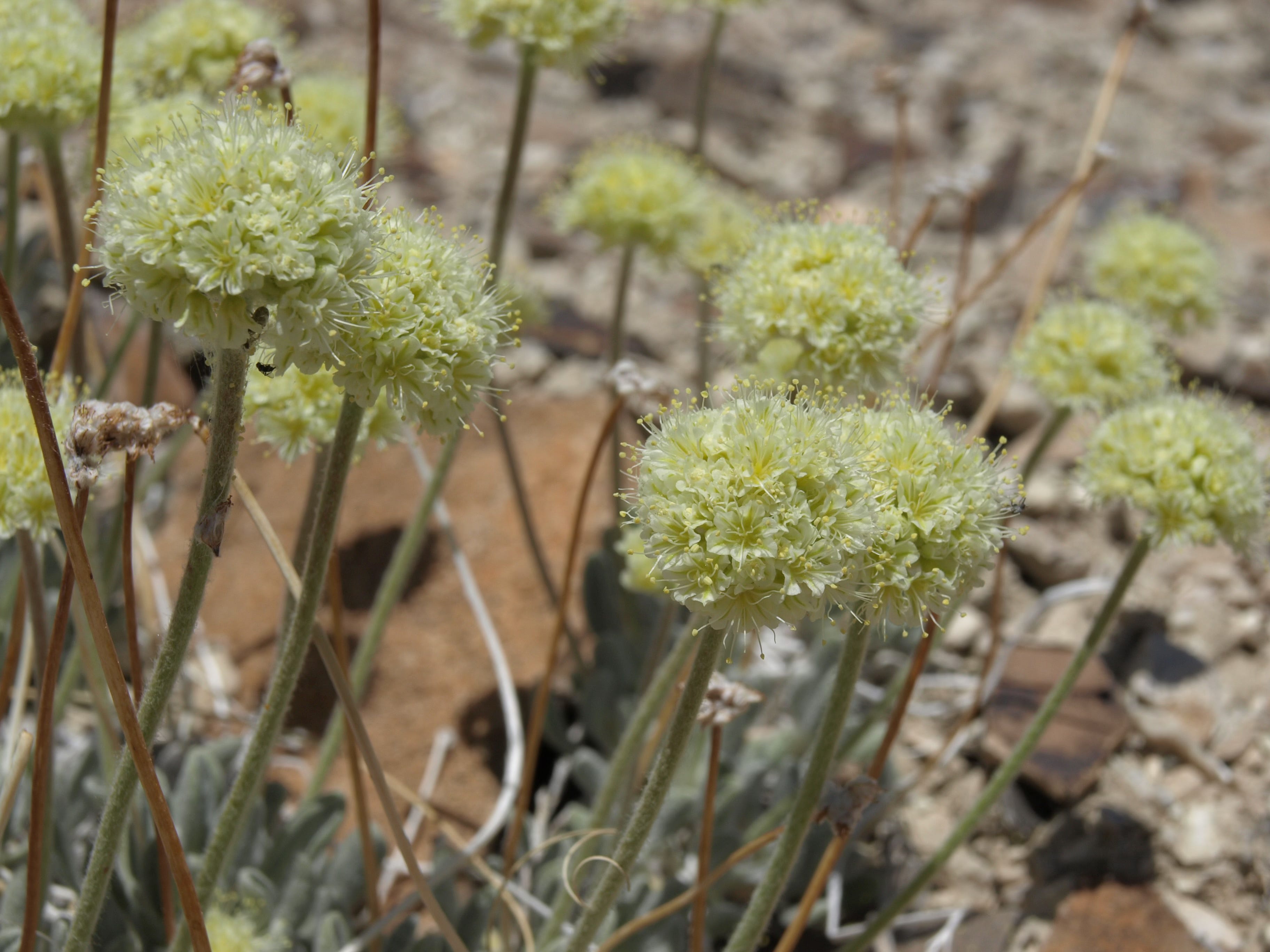
He's a prolific collector. One species he discovered, Erigonomum tiehmii, is so rare it’s on the Endangered Species List (for as long as the list lasts). It’s a beautiful little buckwheat that I would grow if it weren’t critically imperiled and I had even a modest skill for growing buckwheat from seed.
The only buckwheat I grow is the weedy E. deflexum. Its virtues are that it grows with abandon (it is a weed after all), attracts the Mormon metalmark butterfly, and has the prettiest little pink flowers when the cold arrives (they start white in summer and turn pink in fall).
So I was very glad to find a cultivated buckwheat. I’m trying it out in the new garden I’ve been slowly seeding and planting on the west side of the house. Eriogonum fasciculatum ‘Little Rascal’ is an Arizona native selected and grown by Civano Nursery. It grows about two to three feet tall and wide, takes sun or part shade, and flowers from spring to fall.
Just now, its flowering stems are stretching out like clenched fists. I expect to be punched one day as I scoop dog poop from the bare spaces where the poppies once were. Like E. deflexum, the blooms age to pink.
Mercifully, I survived digitizing Eriogonum without incident. But I learned that Tiehm has seven plants named for him, and there are thousands of specimens in the collection to digitize. I cross my fingers, pull a specimen from the shelf. Hope-to-god it’s not a tiehmii.