


A Zen practice for your consideration: Find a cactus, a formidable Opuntia, and put your hand into its spinous labyrinth, without gloves or implements, and extract the plastic peanut hidden there.
I sometimes think that trash was invented to dull the beauty of my cactus.1
For a long time, I’ve wanted to say something about cactus. I’ve tried here and here. I’ve taken photos. Or tried to. I lift my phone in the morning light and center on a flower. The petals only look like crêpe paper—they are thicker, waxier, tolerant of the sun. The stigmas are like fiber optic cables. The pollen is a fine golden dust that coats the tip of my index finger as I reach in and stir the flower’s contents.
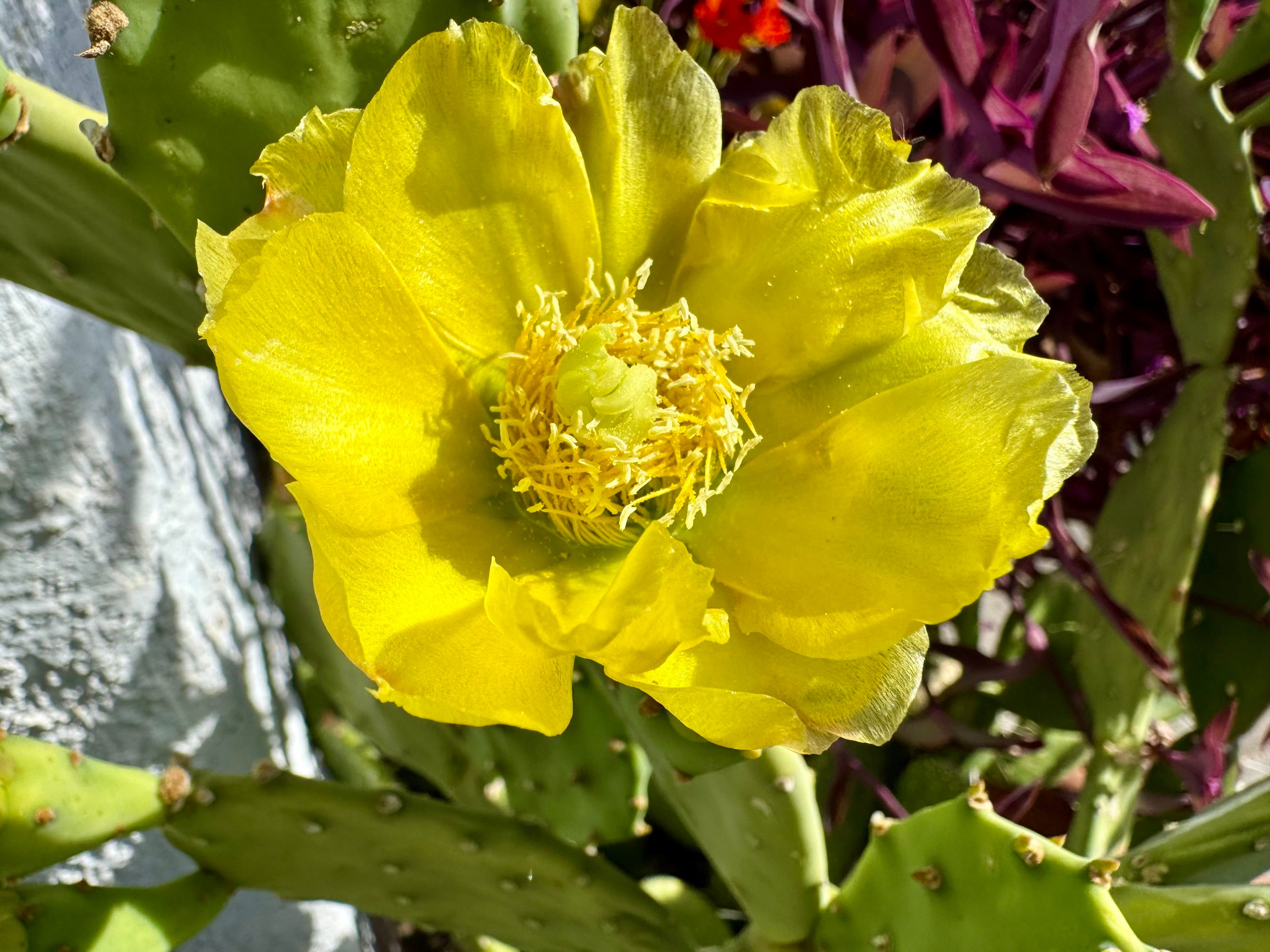
But I don’t take a photo. I don’t even write about it. Cactus are ineffable. The space between the spines, where the plastic peanut hides, is the cactus. The cactus is the thing it is not: broad-leaved and luscious, a peach picked and consumed.
Cactus fruits are edible. And it is well worth the gardener's time to grow Engelman’s prickly pear (Opuntia engelmannii), to harvest the fruits, to juice them, and to add them to lemonade. I keep meaning to try this. I collect the fruits too late, I shave off too much skin, the seeds are little BBs.
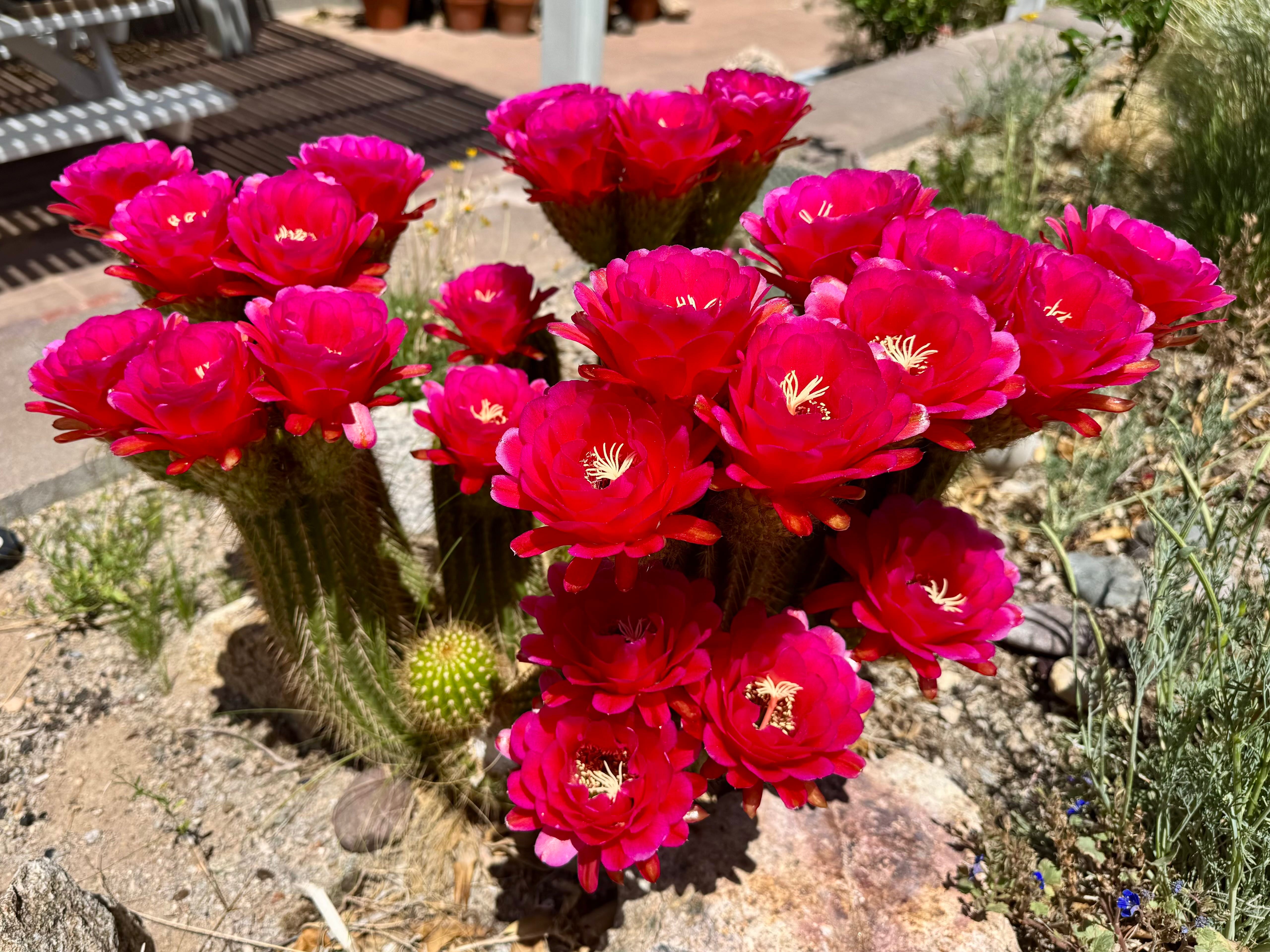
Columnar cactus are different. They are the desert gardener’s answer to allium, the perpetual punctuation marks of the dry garden: golden torch (Trichocereus spachianus), Mexican fence post (Lophocereus marginatus), San Pedro (Echinopsis pachanoi).
I have added these last everywhere. A great wind came through my sister’s property and blew over all the landscape architect’s carefully planned planting. She gave me broken arms that I cut into still smaller pieces and propagated.
Have you ever cut a cactus? The knife goes in after the first puncture like a hot knife through butter, but then you must saw again on the other side.
I cut them into 12-inch pieces, put them in gritty potting soil in gallon pots, and let them rest for a good six months.
This spring, they were rooted and fat with water, and I have added them to the very dry garden on the west side of the house and throughout the yard. My garden has turned medicinal. Bright green towers point to heaven, or if not to heaven, at least the stars. They echo the towers on the Las Vegas strip, the background for my garden.
But back to paddles: they are a desert shrub of extraordinary beauty. I wish we planted more of them. You’re not walking through, or sunning in, or playing soccer on the gravel patch that is your front yard. Fill it with cactus. A cottage garden of the treacherous, glochidinous, and dry. Pack Opuntia in.
A note regarding more than one cactus. Cacti is Latin; cactuses is clumsy. For me: cactus is to cactus, as mouse is to mice.