


The ground is a yellow ochre carpet. It crunches under my feet, as if spring confused itself with fall. The palo verdes are in bloom.
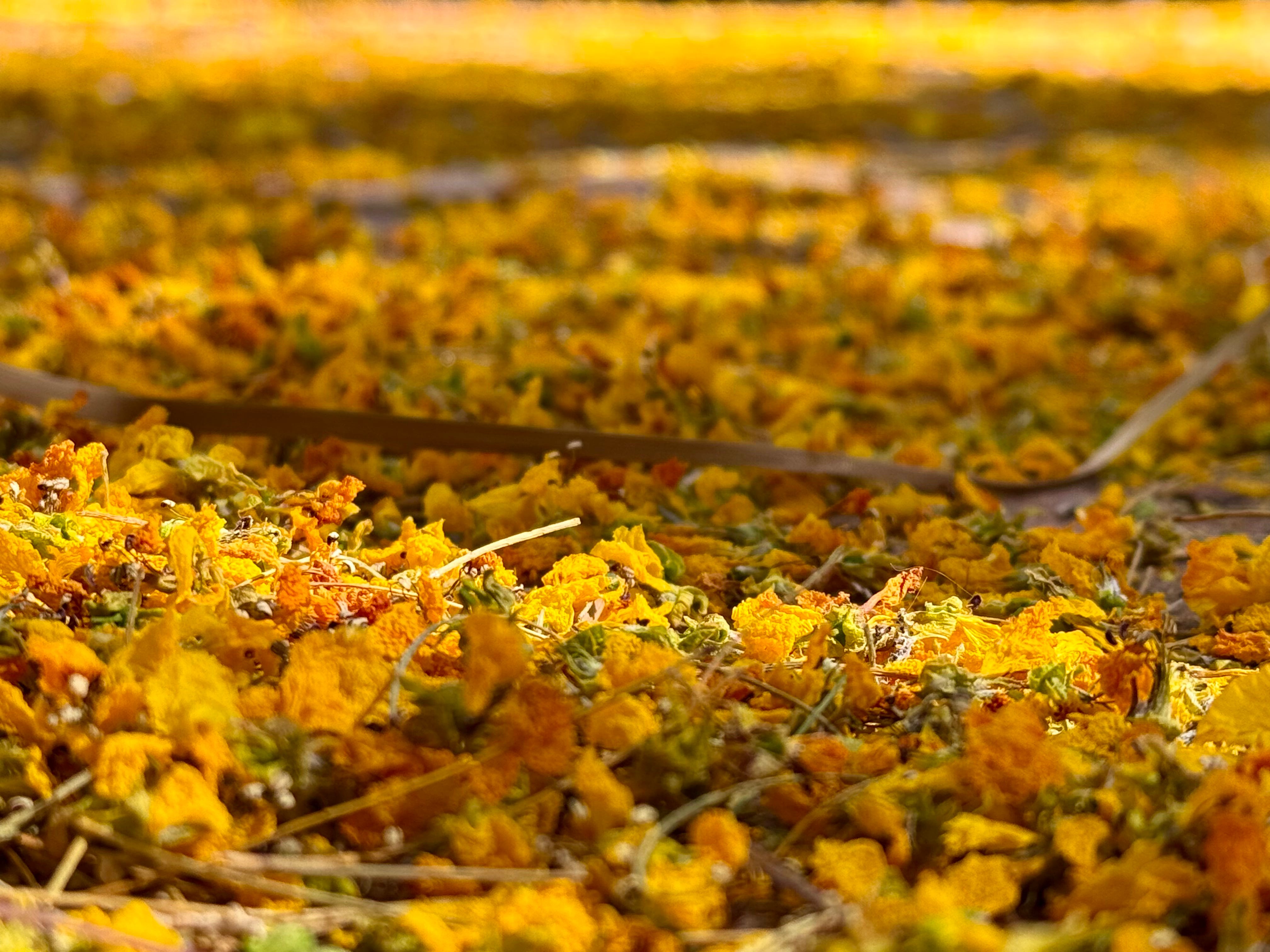
These blooming trees signal the end of the cool season and that summer’s heat is sure to descend. In a way, they suggest senescence. The Mojave desert is a strange place; as soon as spring gets going, it ends.
Mary Austin, in her book, Land of Little Rain, described the Mojave Desert as “the country of three seasons. From June on to November it lies hot, still, and unbearable, sick with violent unrelieving storms; then on until April, chill, quiescent, drinking its scant rain and scanter snows; from April to the hot season again, blossoming, radiant, and seductive.”
We are in that third season, the few radiant weeks between April and Hot. When spring and summer and fall are packed into one glorious burst of blooms. It’s not just the palo verdes, the desert willows are blooming, too. Their orchid-like flowers are certainly seductive, but they can’t compete with the palo verde’s yellow blooms.
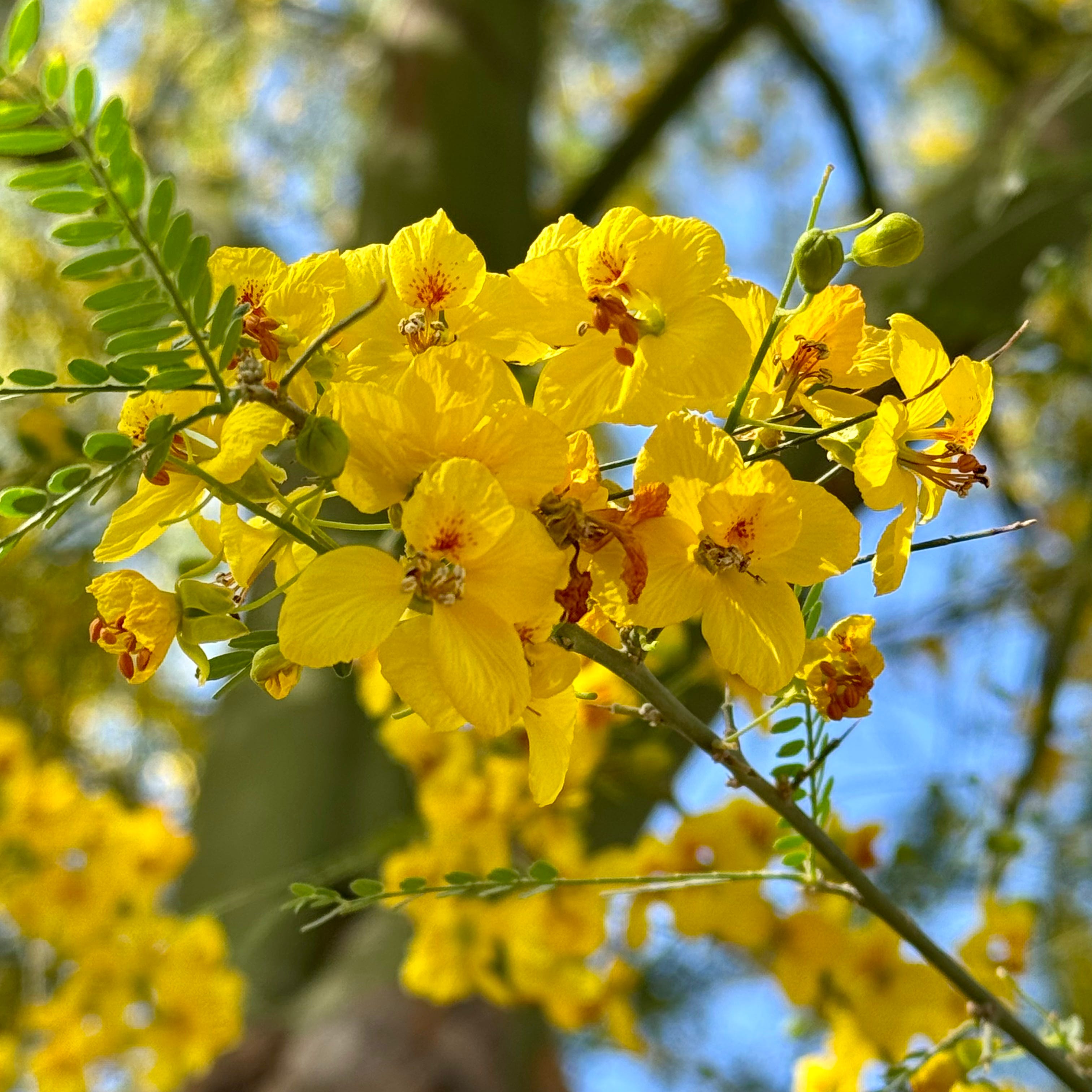
The blossoms smell like mown grass. They intensify as they dry on warming ground. The oleander are in full bloom, too, and the garden is perfumed with vanilla, and musk, and the color green, heat’s herald. Always the heat. This would make a fine perfume. Desert No. 5. Worn sparingly. In the wild, this combination lasts only a week or two. Less, but more intense, if it is hot and windy.
Many of the palo verde trees in the valley are hybrids, a variety known as ‘Desert Museum.’ It is a combination of three different species: blue palo verde (Parkinsonia floridum), foothill palo verde (Parkinsonia microphyllum), and Mexican palo verde (Parkinsonia aculeata). It is often multi-trunked, its bark a bright lime green.
Desert Museum green is bold and care should be taken when underplanting. More yellow than blue, its green reads warm and benefits from the incorporation of other warm-hued colors, either as flowers, foliage, or pottery. With good reason, bright golden barrel cactus are often planted underneath. But bougainvillea’s hot pink bracts planted nearby would make an excellent combination. Other plants to consider: Texas yucca (the cultivar ‘Brakelights' is warmer), blanketflower, California poppy, and coral vine.
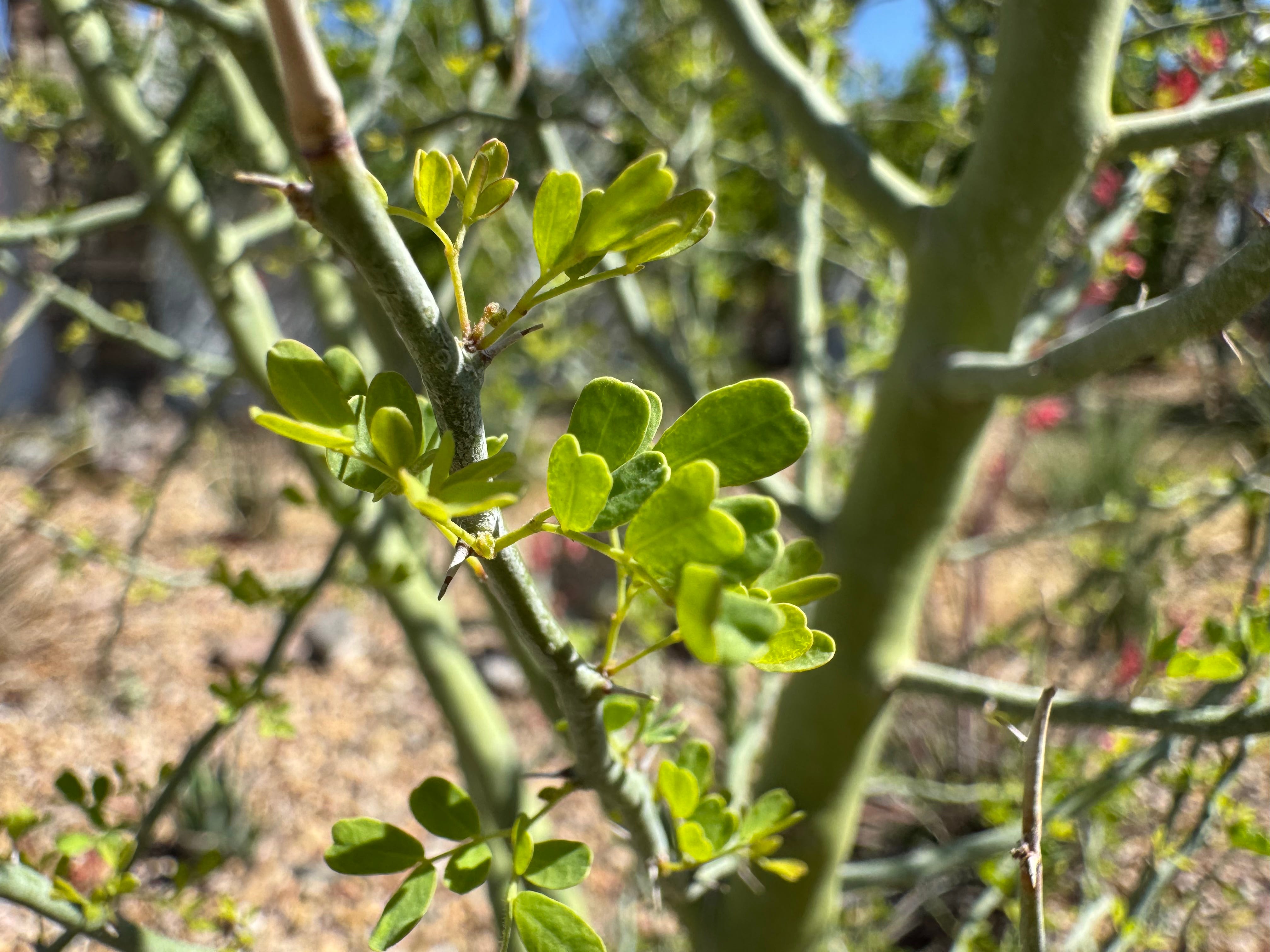
A close relative, less boldly green and more graceful because of it, is getting established in my front garden. Palo brea (Parkinsonia praecox) is as cool as palo verde is warm. Native to Northern Mexico and the Sonoran desert, its bark is a pale, sea green. “So smooth,” according to Mary Irish, “it resembles a dancer’s leotard clinging to the winding branches.” The specimen in my front garden is too small to evoke Irish’s vivid description, but the bark’s cool tones are a perfect fit for the relaxed greens and grays and blues of the Mojave desert.
Palo brea is not always available at nurseries. I found mine at a backyard nursery that was going out of business, growing in a pot much too small for its size. It had no leaves. I put it in the ground in early fall and it immediately leafed out, but a week or so later, all of its leaves fell off. It was a lovely, tortured mess of pale green sticks. Sculptural, really. Then, just this week, tiny leaves emerged up and down its branches. It seems to have accepted its new home.
Large palo brea trees, victims of too much water, can be seen in older neighborhoods. As with all desert trees, don’t water them so much. Many problems associated with our beautiful desert trees, and the complicated and ugly pruning methods undertaken to prevent these problems, could be solved by watering them less. They will not grow as fast, but they will be healthier and longer lived and able to resist our cruel and commanding winds.
In a few days time, all the bright yellow blooms will fall. Already they darken the ground, making it sticky with pollen. A wind will come and blow them all away. Some will make it into the house, stuck to the bottom of my shoes or my son’s. I’ll find them months from now, when the heat has all but burned the memory from my mind. And I’ll be seduced, again, at the sight of that faded-and-once-radiant bloom.