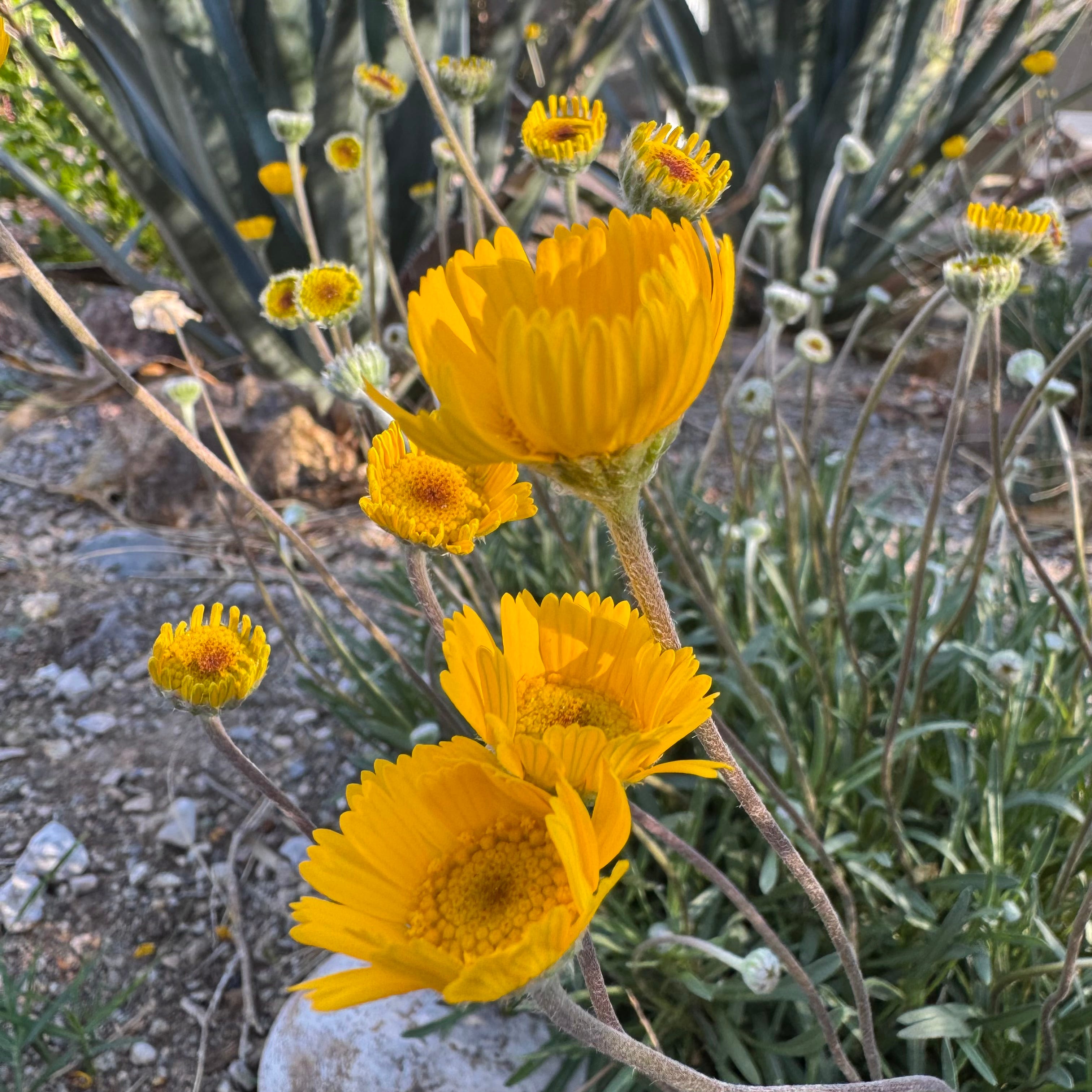

Walt Whitman had a spotted hawk to make accusations, to complain of his constant talk and laziness. I’ve been saddled with a hummingbird: a tiny female Costa’s.
Many southwestern gardeners know well the hummingbirds in their gardens. My great aunt can tell you exactly how many there are in her garden, what kind they are, and their daily habits. The hummingbirds in my garden have always been a mystery to me. They move too quickly; their beaks too sharp for my comfort. But the tiny female Costa’s is particularly present. I am recognized by her, and she by me. We see each other.
Hummingbirds visit and live in my garden year-round. How they manage to find enough to eat all winter is beyond me, although I do my best. Still, there is that brief, cold window when the Tecoma shrubs and the Baja fairy dusters have all but stalled out. Then, the hummingbird feeds on the nasturtium that I take care to protect from the occasional frost. Before long there are the bluebells and the aloes to slake their thirst. They eat bugs and pollen and other foods, too. But since I don’t use hummingbird feeders, I must grow enough nectar-producing and insect-attracting plants for my year-round hummingbird residents.
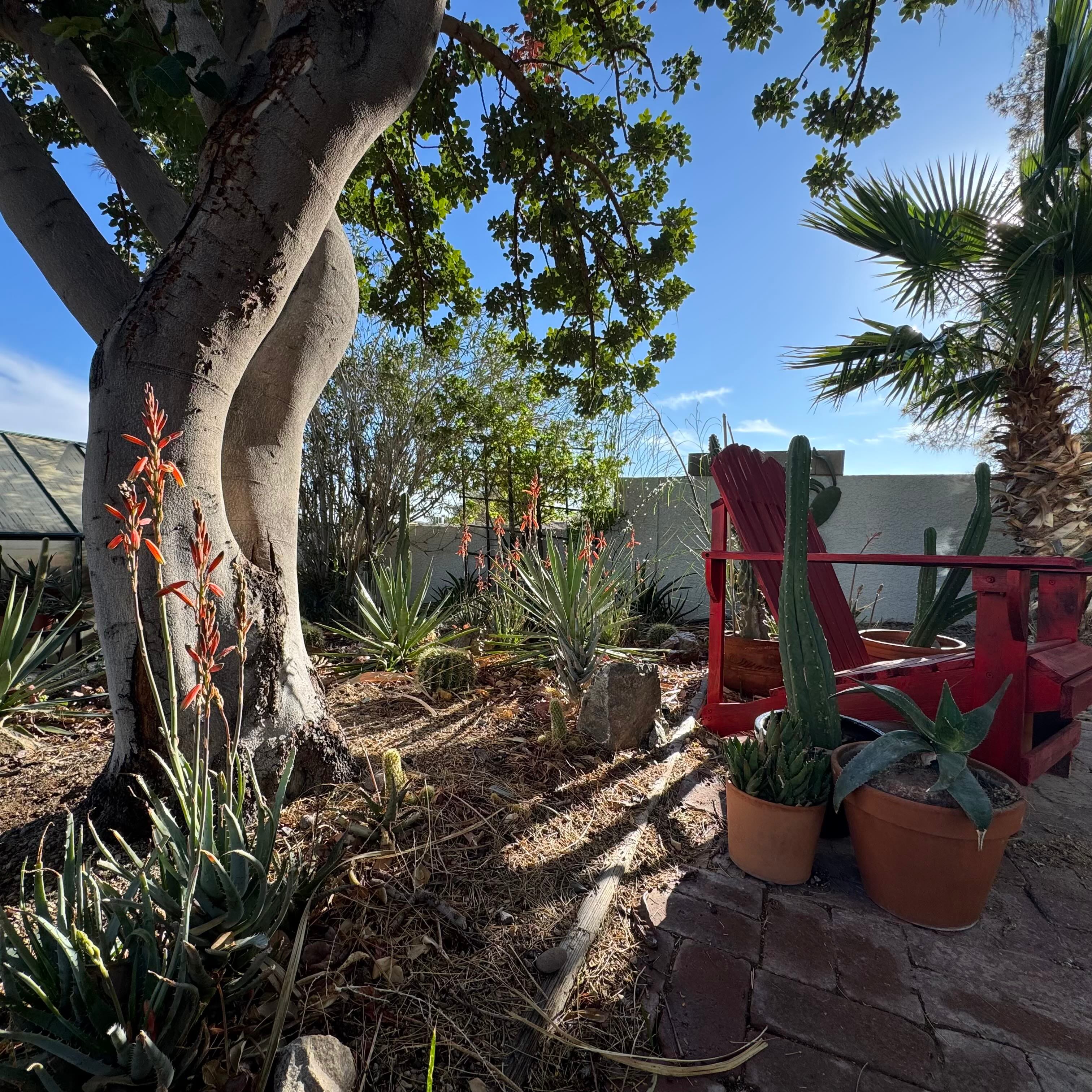
But I know the little Costa’s wants more. Like Whitman, I stand accused, the source of her complaining. She’s not angry with me—there is no aggression in the way she pesters me. No irritated chirrup. There is only her flapping witness of my failing gardening efforts. They are never enough.
I suppose if I had a spotted hawk to complain about me, I would have been a poet. Instead I have a minuscule hummingbird, which means I am a gardener.
I like being a gardener. It suits me. I like writing about gardens, too. But these are not glamorous pursuits.
Take, for example, this week’s chore: pruning. The Tecoma shrubs (various cultivars) have all woken up, but it was a briefly cold winter, so there was some dieback here and there. There’s also the fact of their ranginess, which irritates my husband. So I thin them. Not too much, removing only a handful of older canes, and they are never sheared. They now look neater than I would prefer. But I don’t mind this chore. It is a gentle shrub.
The bougainvillea, though. That is another matter.
In Tove Jansson’s delightful book Comet in Moominland, Moomintroll, a round adolescent, finds that his love, the Snork Maiden, has turned damsel-in-distress. She is being eaten up by a terrible bush!
“To their horror they found that this was actually the case. A poisonous bush of the dangerous Angostura family had got hold of the little Snork Maiden’s tail, and was now dragging her toward it.”
Moomintroll takes out his knife to come to the Snork Maiden’s defense. “The bush glared at [him] with all its green-yellow flower-eyes…and stretched its twining arms toward him.” But Moomintroll attacks the shrub’s waving arms and saves his precious Snork Maiden. “A howl of terror was heard…when one of the green arms twisted itself round Moomintroll’s nose. But it changed to a triumphal war cry when he chopped off the arm with a single blow.”
Each spring, as I consider the two bougainvillea that were already in the garden when we took ownership, and which sprawl confusingly along a stuccoed wall, I become Moomintroll and the Snork Maiden; defender and damsel.
I go at it with long-handled pruners, thick leather gloves, and a long-sleeve shirt. If I were wise I would wear jeans, but the weather has already warmed. Clad thusly, I carefully locate the growing buds in the heart of the tangle, so that I can cut away everything above them.
Why do I have to do this?
Bougainvillea are not really hardy in my garden. They need to be planted in a protected place—a patio works great, or somewhere below an overhang—to prevent dieback each winter. There is a bougainvillea that blooms all winter long in Boulder City under the overhang of a shop that sells souvenirs to Hoover Dam tourists. It is possible, but you’ve got to have the right conditions for it.
Mine grow in the worst possible place: a veritable and very cold wind tunnel for a good two to three months. This year I thought they might be spared! But then February got very cold, and the winds came, and the leaves turned brown and crunchy.
Each year I think, “RIP.” But then it buds out, there in the thick of itself. And each year I prune out all the damaged branches. Because I know in a few months, when the garden is drab and limp, midsummer having claimed the garden for herself, the bougainvillea will give the heat (and me) its resplendent, gaudy, fuchsia-colored middle finger. And I will nod my head back and say touché. Maybe next year one of us will win this battle.