


Some gardeners in the United States experience four distinct seasons. Others get two: too hot and too cold. A select few get one long season, though it must be awfully boring to garden in coastal California. Then there is Vegas, where our seasons are three.
“This is the country of three seasons,” writes Mary Austin, the great chronicler of the Mojave Desert. “From June on to November it lies hot, still, and unbearable, sick with violent unrelieving storms; then on until April, chill, quiescent, drinking its scant rain and scanter snows; from April to the hot season again, blossoming, radiant, and seductive. These months are only approximate; later or earlier the rain-laden wind may drift up the water gate of the Colorado from the Gulf, and the land sets its seasons by the rain.”
The Las Vegas garden ends when almost every other garden you know begins.
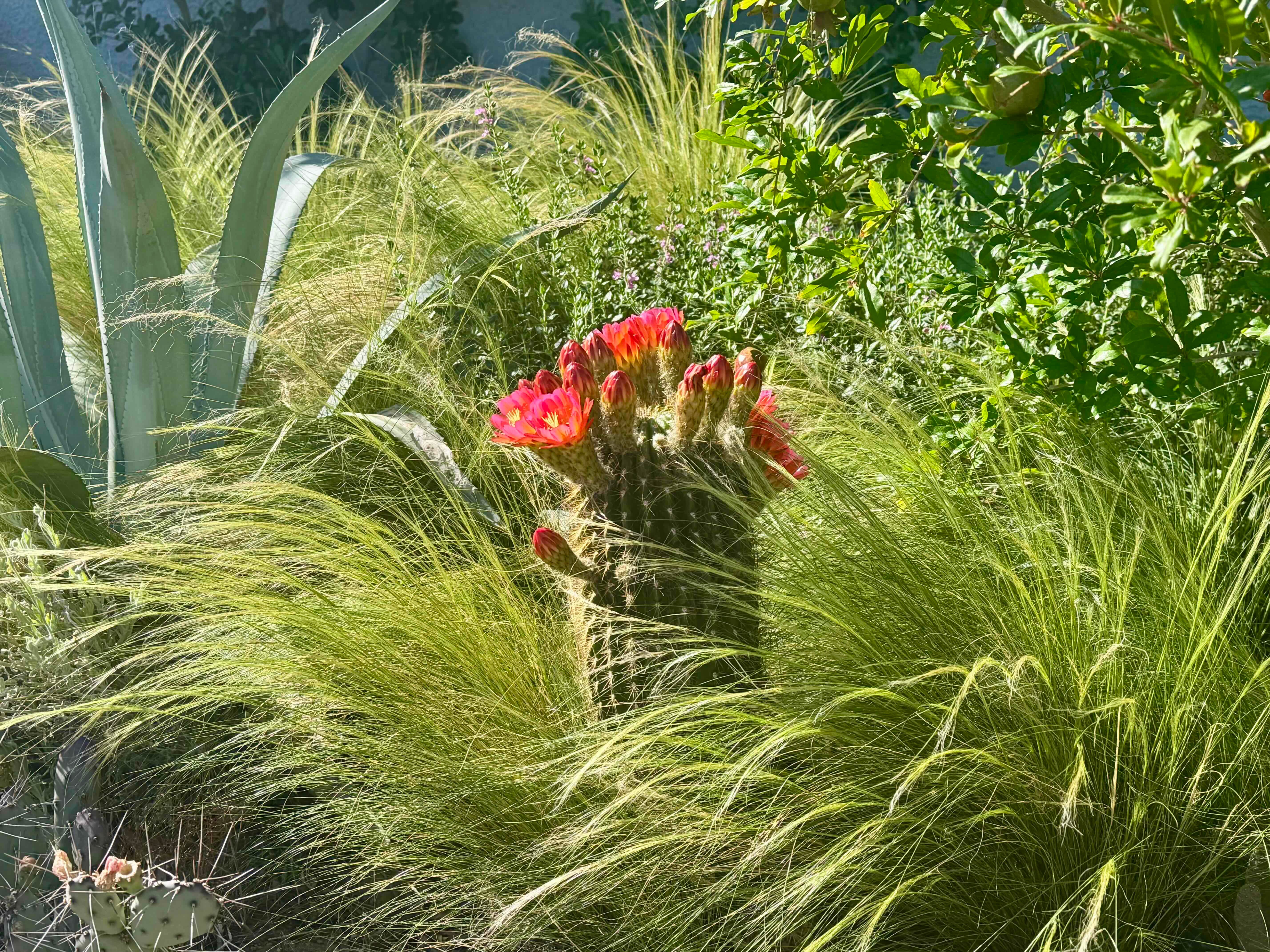
Three Seasons to Enjoy, One Long Season to Grow
Some argue we have two short growing seasons—the fall, before frost descends, and the spring, before heat rises. This was likely true for many years, but rising temperatures have made our winters mild enough that fewer plants go dormant. Others suggest we have a long growing season that extends from early spring to late fall (with enough water, this may be true). I agree we have a long growing season, except we get it in inverse, from October to late May.
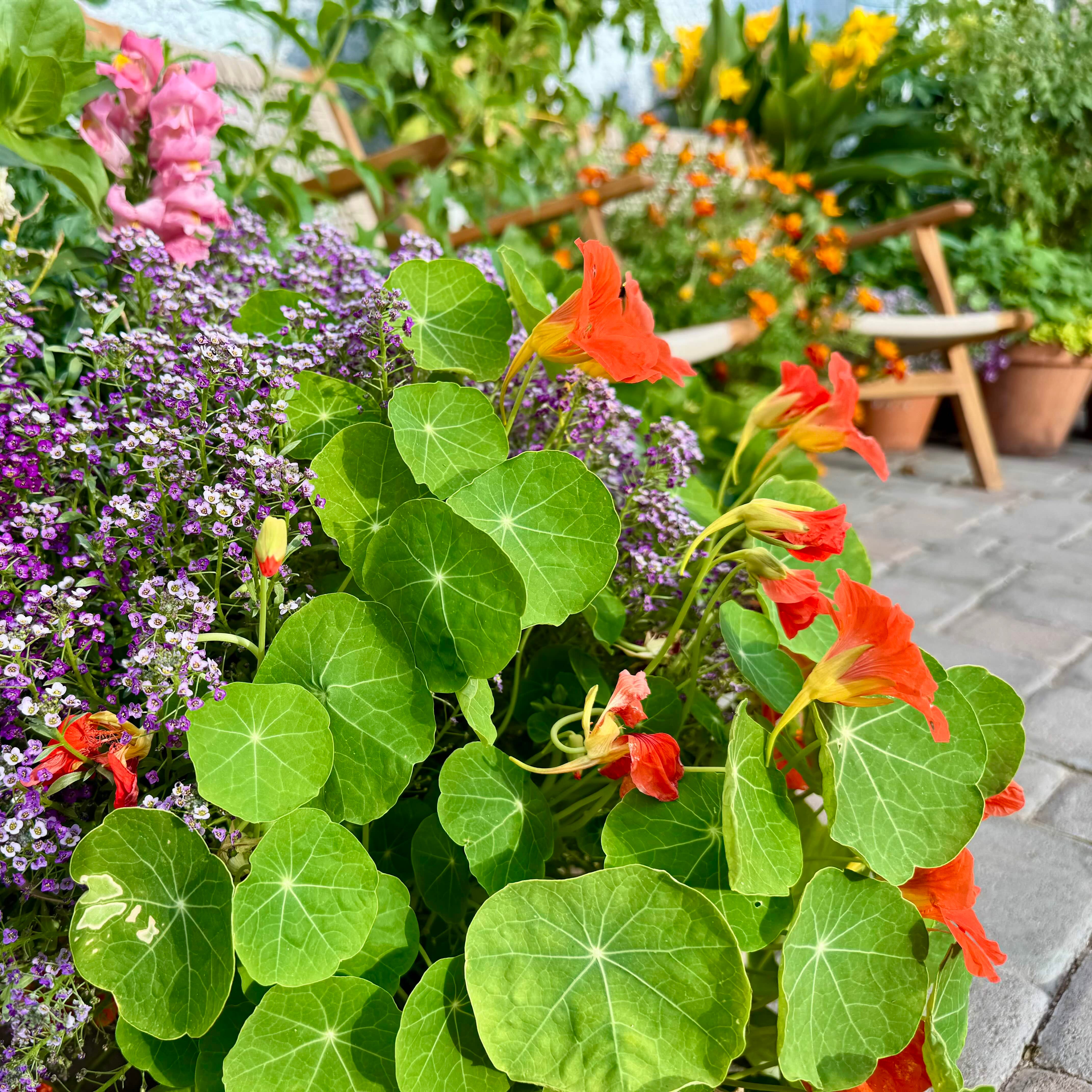
October—March: First Season. Grow cool-season annual vegetables, herbs, and flowers in raised beds or containers; plant trees and shrubs, cactus and agave (while the soil is still warm).
April—May: Second Season. Enjoy the efforts of your labors—California poppies and desert blue bells, penstemon and desert marigolds, native indigos and creosote, hesperaloe and prickly pear, tomatoes and zucchini, if you are very lucky; brace for the heat.
June—September: Third Season. A great time to work on your indoor garden. Our long days and strong sun mean you can grow just about any houseplant well, and even those that prefer bright light will get by in an east-facing window.
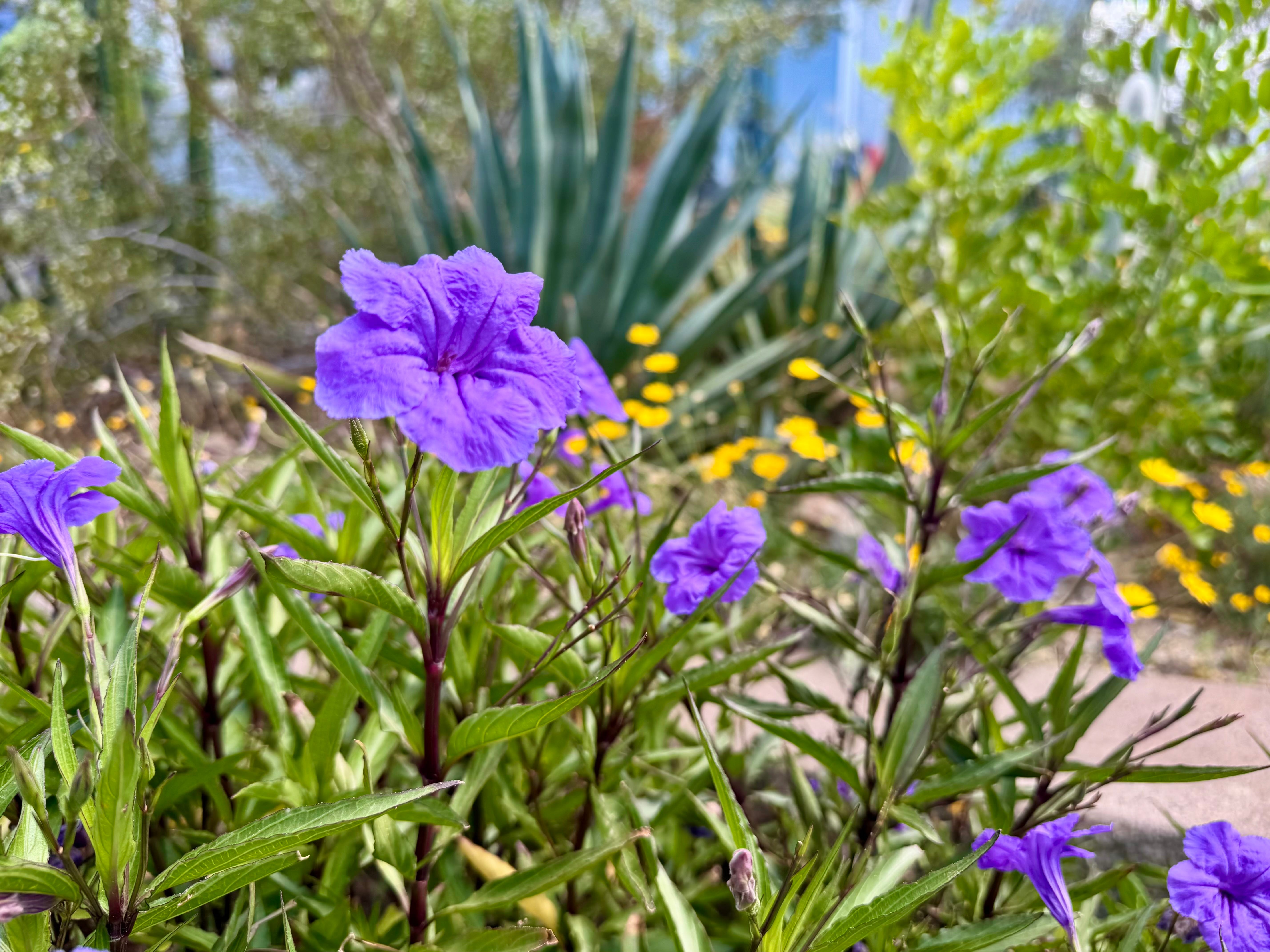
Entering The Third Season
How does the garden cope? Outside of the occasional third-season monsoon, my garden gets most of its water during our second season when I prepare my desert-adapted plants for the heat. The extra water allows succulents to fatten up, and for shrubs to grow their roots so that, when it rains, they have the infrastructure to make the most of it.
Mentally, I practice a form of deranged acceptance. I vacillate between staring at my weather app and the garden. The former in perpetual fear of the first one-hundred-degree day, the latter in astonishment at how beautiful a desert garden can be.
Of course, you may choose to resist this peculiar and natural rhythm. Some gardeners do. There is a famous gardener in the valley who waters her food crops no less than nine times a day and harvests all summer long. You can grow shrubs and annuals that soak up the water authority’s ceiling of six times a week. A walk down The Strip will show you it’s possible.
Or, you can let your plants fall into a sleepy, subconscious state where they look good enough while you visit coastal and mountain gardens on the weekends. You can lounge by the pool in the evenings after work while your friends from cooler climes drag hoses and carts around the garden. Then, when everywhere else the horticultural calendar rests, when your friends are stuck inside, held captive by the throes of winter, you will plant scrub oak in the back and desert sage in front, and your containers will overflow with nasturtium and dill, alyssum and geranium.
A beautiful garden and post, Isaac! ❤️
Your garden looks amazing! Great advice.