


My sister’s garden in northern Utah, on the edge of the Salt Lake valley, just east of the Oquirrh mountains, grows from cold, rocky clay. It is a beautiful place. An exercise in abundance and restraint. It overflows with plants, yet is carefully coordinated as to color (she favors pink). But this year, spring happened too early and too hot, as it did for most of the western United States. What began with hope turned into a text chain where she and I complained about everything going wrong:
Her: The apricot tree bloomed and froze.
Me: The California poppies balked at the early heat.
Her: The dahlias have started. [A few days later]. The dahlias are shriveled up and sad.
Me: The bougainvillea is glorious. [A few days later]. The wind has taken away all the bracts.
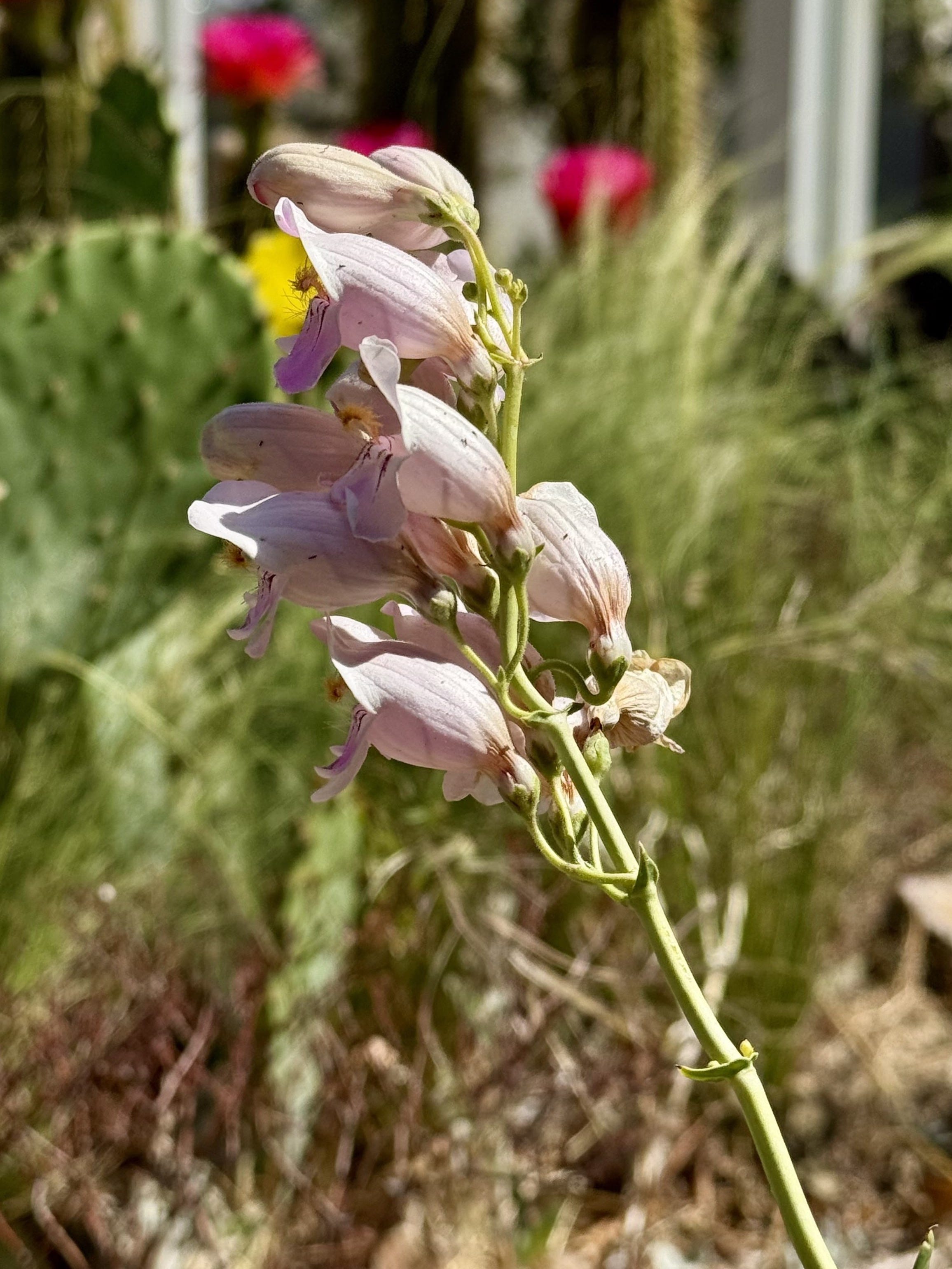
Her tulips vacillated between a college try and a failing grade; my Penstemon parryi went for broke, then folded during March’s heatwave.
All gardeners west of the 100th meridian are terraformers in miniature. Here arises a disturbing gardening realization: I garden to rework the land into some image of what I think it ought to be, but what I work with to make the garden mine is decidedly not mine. The gardener is thrown, to borrow a term from Heidegger, into wind and heat, rain and soil, all of which we can’t control. What remains gives the gardener an outsized idea of what is possible.
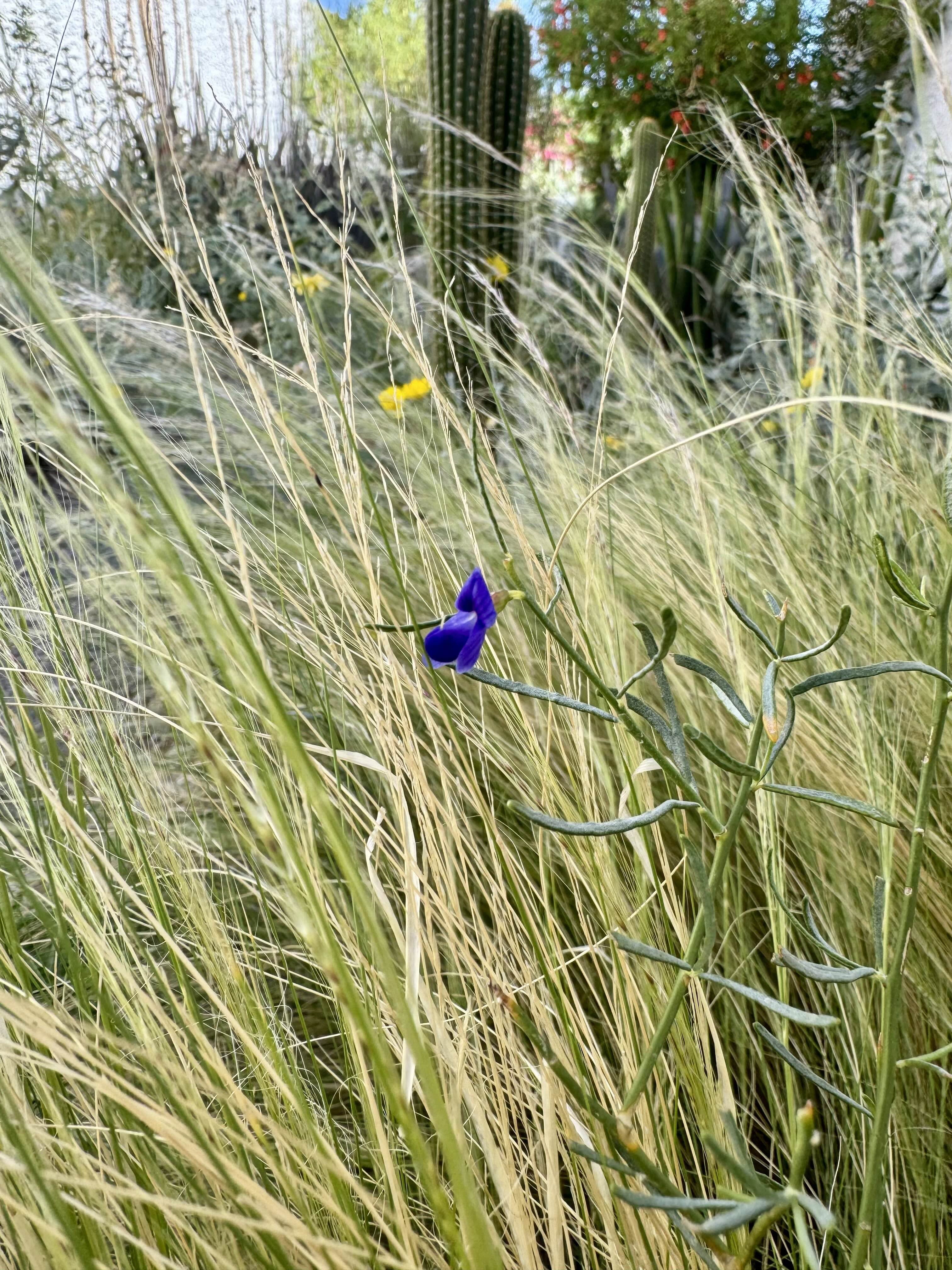
My sister decided that only the seeds we choose to sow are in our control. Yet these germinate, or do not germinate, according to their own mysterious rhythms. Even native shrubs need help in their first few years, the weather often too erratic for dependable germination or establishment, should we choose to let nature run its course.
I wonder if all the setbacks are to remind us of our place, that we are subordinate to the garden, to nature, to God.
And these are just the ornamentals. The goal of growing food is even harder, even more transparently out-of-place and out-of-our-control. The aphids show up earlier and earlier, an insurmountable lead for the hungry lady beetles that do their best to keep the local population in check.
Her: The aphids have descended on my pepper starts.
Me: Peppers? A fat rat helped themselves to mine. And the cilantro, mustard, and arugula have bolted, have already gone to seed.
I think it was the Not So Bad Tempered Gardener who said that gardening was hard enough already—why make it even more difficult by growing food?
We considered giving up.
But I harvested my first Mojave-born zucchini after almost five years of trying. And the cherry tomato plants are laden with little green globes (if only they would turn red and I could eat them). The zinnias are already tall, their bright pink rays a useful foil for the dark green herbs I grow them with: basil, dill, mint, and oregano. The parryi started up again with the recent moderate temps, re-blooming just as the Palmers (Penstemon palmeri) start. A generous pollinator may visit both; a hybrid may appear some years hence. My sister has decided to understand her apricot as more ornamental than edible; the fruits, when they come, a kind of grace.
The paradox of the garden is that the gardener is necessary but not sufficient. The more we assert control, the less we have. We frustrate ourselves with our failures, obscuring the joy that what we see and smell and feel is a gift, not earned at all. Any expectations we have of our gardens are quickly dashed against the realities of a changing climate. Still, a garden appears, and our plants grow, as they will, despite and because of the gardener.


Yay! You're back!